Related sites:
Newsletter: Perspectives on Power Platform
Company: Niiranen Advisory Oy

AI makes it seem easy to sound intelligent without being present. It also makes it super simple to throw all your social capital down the drain.
When the blogosphere was born in the Web 2.0 era, and when social media became a thing, we were blessed with the fact that it was hard to automate things. Putting words, let alone images or videos, out there required human effort.
Of course it didn’t take long for the first bots to arrive. Anyone who set up a WordPress blog of their own pretty soon learned that installing Akismet (launched in 2005) or something similar was a practical requirement to filter out the flood of spam comments. Even with these plugins enabled, some stuff still inevitably gets through. There are false positives and false negatives.
I don’t usually stress too much when cleaning up blog post comments. Sure, there’s a certain sadness of “why do people bother” present when deleting obvious spam, as well as the wish for the machine algorithm to do a better job of preventing me from seeing this sad reality.
What gets me genuinely angry, though, is a different type of spam. It’s the comments that have been posted via a legit account/identity, but which are entirely written by LLMs. It feels like an insult. I am reminded of this famous quote from Hayao Miyazaki, co-founder of Studio Ghibli, from his (2016) reaction to AI-generated animation:

The human evolution first moved us from animal hunters to animal farmers. That of course enabled the kind of progress that has improved the quality of life quite dramatically, leading us to now live like kings compared to people who didn’t even have hot showers a hundred years ago. Simultaneously, meat consumption at its current rate is a genuine threat to the survival of humanity on this finite planet of ours. Growth without balance is not progress, it turns out.
Today, the evolution of farming is happening in the digital realm. We’ve evolved from farming simple subscribers and followers for our writing and other creations to farming attention in the endless content feeds managed by Big Tech algorithms. Even when we don’t have any commercial interest in mind, it’s a basic human need to get noticed. That’s why it matters how many views and reactions our posts get. We are tribal animals who feel the need to belong and be seen as a part of our tribe, thanks to how this has always impacted our chances of survival.
What happens when the commercial interests are then introduced into this game, together with the growing options for automating things with AI? Bad things, of course. At least for anyone who is on the receiving end of the content pipelines. SEO tactics are getting replaced by GEO: generative engine optimization. In short, playing tricks with online content to try and get the GenAI tools to choose your product/service/site as a source on which LLM responses are based.

The above image is taken from one such site/party that engages in flooding the digital channels with their content, specifically in the Microsoft ecosystem. One of the people involved in this operation left an AI-generated comment on an old blog post of mine, which then triggered me to look deeper. And the further I looked, the more gross it all felt to me. To process it all, I had to write about it, and here we are now.
It’s easy to laugh at an image that reads “ChaTCPT”, “PERPELEXY” and “Geminn” used to promote commercial services for GEO. Unfortunately, as the models get better at reproducing specific words in images, that accuracy issue will be resolved, but the core issue will remain: it will only become harder to recognize what content has been authored or even reviewed by a real human being. I don’t think AI text and image watermarking practices and regulation will help much here.
Company websites, especially in the IT business, have been full of empty words even before LLMs. It’s not such a huge loss that these get replaced with something the machine wrote as the text was void of any human connection anyway. Where the GEO farming does real damage is on the community side. The place where the setting was not about “company publishes, individual consumes” but rather peer-to-peer exchange of information
These days, the chances of a new blogger I come across in the Microsoft community being just someone who publishes text authored by AI is way above 50%. With forum posts and social channels, anything that appears to have more depth than a random response with a few sentences has a high chance of sounding like an LLM when you start reading through it.
We’ve reached a point where slop is already the default assumption. If I don’t know you from before, my brain is now wired to think that especially longer pieces of text that would have previously served as a signal of effort are now a signal of inauthenticity. This is naturally incredibly sad and demotivating for anyone who wants to become an active contributor in the global community. Not only do they need professional expertise and the willingness to share it — they also need to prove their humanity.
Imagine a world where you have to question if the people you see around you are robots. You don’t have to imagine it anymore, you can just open LinkedIn.
After Twitter became a Nazi bar and I decided to leave it behind, my primary channel for Microsoft-related community engagement moved to LinkedIn. While I do enjoy the format of slightly longer posts that LinkedIn is designed around, the obvious downside is that the whole site is flooded with slop. You can’t filter it, you can’t avoid it, you just have to live with it. You can click on the “seems like AI slop” option but who knows whether that will just provide more training data to Microsoft’s own models to avoid getting caught in the human filter.
Occasionally, I’ll still write posts criticizing what people are doing to these online communities. For example, this Shape of Slop post from June:
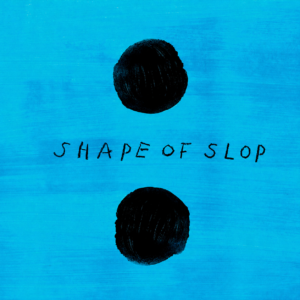
Someone just did quietly something. The question? Short answer.
You know it before even clicking the […see more] text. Yes, of course it’s AI slop. It’s also how half of the posts in your LinkedIn feed probably start.
No matter how big the models become, the text they produce still has that distinct LLM smell. Nowhere is it more apparent than on LI.
Yet people keep posting it anyway. The format itself doesn’t guarantee attention, which is clear from the many “recommended” posts I see with this format that have close to zero reactions.
But when it happens to work, it’s a validation of its power. Plus, since generating such content has nearly zero cost on mental energy required from the poster, why not keep trying? “Everybody’s doing it anyway!”
The monotonous style of AI writing gradually turns regular words into toxic slop signals. “Shape” being one of the Claudisms that has been ruined for me. Every text that talks about the shape of something now triggers the feeling of reading the output of a chatbot rather than a human being.
In the feed, you can ignore and unfollow things. It’s much worse with comments that I get on my posts where someone just summoned ChatGPT to write it. The clearest tell being that they exhausted all the raw materials from the original post (the only context available) and produced something shaped like an intelligent, professional text that says absolutely nothing.
On one hand, every comment & engagement improves the chances of LinkedIn’s algorithm graciously showing my original post to other humans. And yet the idea of someone pretending to be human while letting their robot do the talking makes me want to immediately block them.
I don’t have a problem reading the Claudisms when I actually prompt Claude myself. Modern LLMs with tools are truly helpful when exploring things and doing research on online articles. The LLM talk is just fine there. After all, it is the natural dialect of the party doing the talking.
But you are not a robot. Your user account has a human name and a picture. Using an AI ghostwriter and then putting zero effort into even trying to say things how you, the real person, would say it… It feels like fraud in broad daylight.
It’s not forbidden, sure. But it has a real cost. In the eyes of the rest of us humans, that slop becomes the Shape of You.
All the corporate statements on Responsible AI remind me of the “drink responsibly” stickers on alcoholic beverages. It’s not forbidden to get drunk but you’re going to be held personally responsible for any behavior that breaks either social norms or actual laws while being under the influence. Likewise, getting drunk on AI is a real risk for the people around you if you’re not able to control your actions.
For example, we should not normalize sending your robot out to talk with a human while it pretends to act in your name. It is obviously destructive to the social connections between persons, yet people do it anyway:
Doing an agentic cold call is not quite as bad, given that there is no social capital in the relationship yet (and probably never will be). But when real people intentionally use their machines to post AI-generated comments under things that their connection, a human being, has authored – you are throwing that social capital away.
Yes, I know how the LinkedIn algorithm supposedly rewards “insightful” comments under others’ posts. No, this in no way justify such idiotic behavior. It’s one of those things you only end up doing while you’re drunk on AI and incapable of thinking through what the consequences of your actions are. Taking a few shots of tequila before delivering a keynote speech might alleviate your stress and boost your self-confidence. That’s still not a smart thing to do and most people understand why.
The similarities with what alcohol does to you and what AI can do don’t end there. Both have the potential to be misused as a way to escape reality and the limitations we face in everyday life. Knowing the risks and where you cross over to the irresponsible side takes practice and often includes embarrassing lessons to be learned. When it comes to LLMs, even all adults have less than four years of experience from consuming intoxicating substances like ChatGPT. Our entire society is basically just a bunch of teenage kids getting a few cases of beer and heading into the woods for a wild weekend. Mistakes will be made.
The social pressure to act just like the cool kids at school is not something that gets erased from our psyche once we enter working life. The insecurity just finds new avenues to manifest itself, changing from “get drunk” to “adopt AI”, for instance. Underneath it all may be that nagging feeling of not being enough when you’re just being yourself. So we look for ways to hide behind a mask that would shield us from the illusory judgement of others. Once you start playing a role that sets the new baseline of who you appear to be for the outside world, giving it up all of a sudden becomes a scary thought.
Artificiality has never been easier to pull off. This in turn generates a scarcity of authenticity. The things that cannot be replaced by an agentic loop will have greater value to us humans, even if we have a hard time articulating an exact definition for those right now. All I know is that pretending to be more like a machine is a losing game and you should keep a close eye on where your AI assistants end and where you begin.
In this life, you have one job: be a human. At least until AI makes it possible for us all to finally be Batman.
Cover photo by Alessio Ferretti on Unsplash